

How to Recognize a Great Dive Center – and Become a Reef Protector Yourself
Crystal-clear turquoise water, vibrant underwater life, and weightlessness – diving is one of the most magnificent ways to experience nature. But how do you recognize a truly high-quality, responsible dive center? Top-notch equipment and friendly service matter, of course. However, genuine quality today comes down to attitude: a deep commitment to protecting the ocean and its inhabitants.
An outstanding dive center protects what it loves, and it shows its guests how. It embodies environmental awareness, sets an example, and actively takes part in ocean conservation.
1. Single-Use Plastic-Free on Land and Onboard: Everyday Conservation
Sustainability doesn’t start with the descent at the reef; instead, it begins right at the dive center and on the boat. In fact, avoiding single-use plastic is one of the clearest signs of true dedication.
- No Plastic Water Bottles: Water dispensers on land and onboard replace single-use plastic bottles, so divers simply fill up their own reusable bottles.
- Mugs Instead of Plastic Cups: We serve coffee and tea in real ceramic mugs.
- Bulk Packaging Over Single Containers: From disinfectants to cleaning agents, we use large containers to cut packaging waste drastically.
- Tote Bags Instead of Plastic Bags: Simply bring reusable cloth bags (for example, for local shopping) to eliminate unnecessary plastic waste in your destination country.
2. Leading by Example: World Cleanup Day in Naama Bay
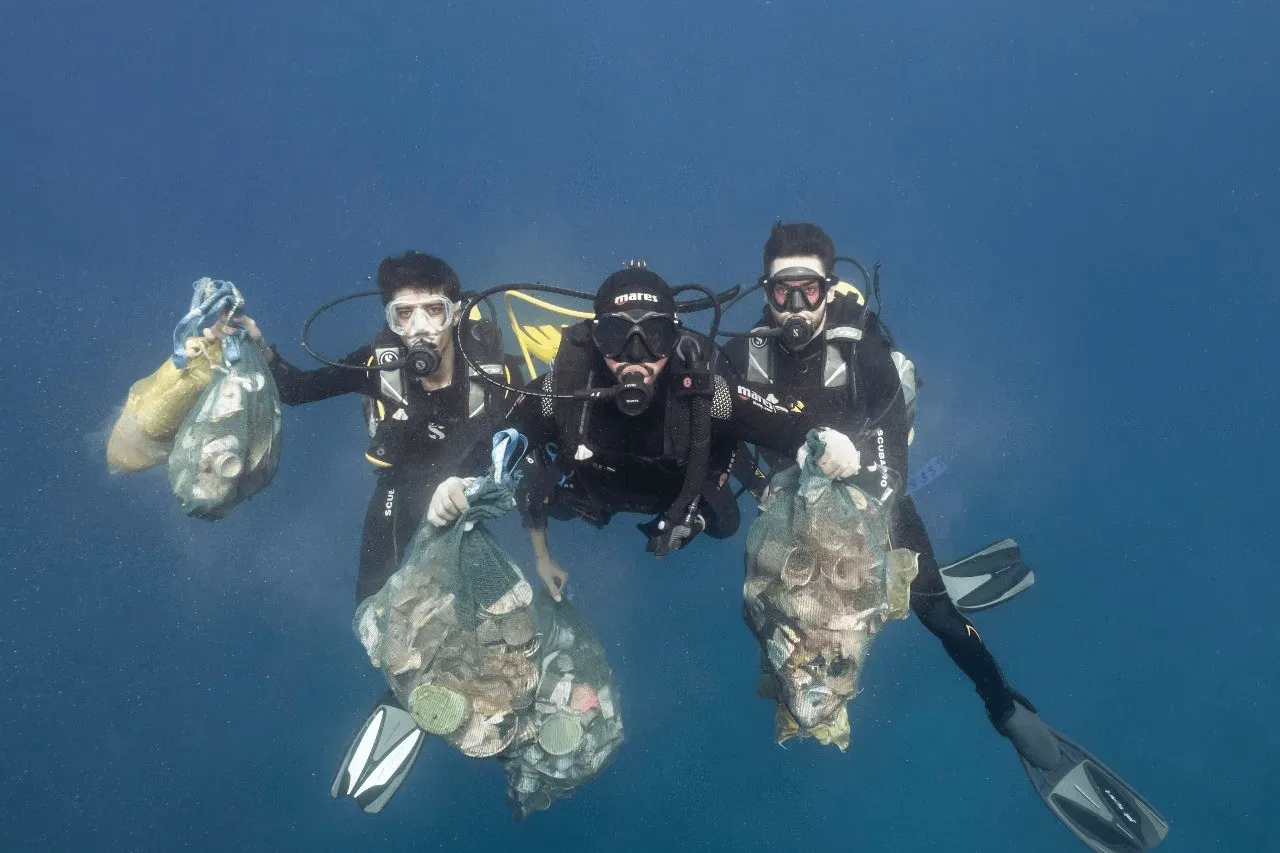
Responsible dive centers also stay proactive. A prime example is the annual World Cleanup Day in September (this year, it takes place on September 20th). After a busy summer season, we at Red Sea Marine organize land and underwater cleanups to rid Naama Bay’s beaches and reefs of trash, particularly plastic waste.
3. Citizen Science in Action: The Turtle Watch Project
Beyond cleanups, a hallmark of exceptional dive centers is that they invite guests to actively participate in research and conservation initiatives, such as the Turtle Watch Project.
- Long-Term Commitment: Nicole has actively supported the Turtle Watch Project since 2016, and Anita joined her in 2021, bringing their wealth of experience and passion directly to the team at Red Sea Marine.
- Current Population: Naama Bay is currently home to 14 individually registered and adopted sea turtles, and the team meticulously maintains all sighting records.
- Get Involved & Identify: Each sea turtle carries a unique scale pattern on its head – similar to a human fingerprint. Through Photo-ID, divers can submit their photos and directly contribute to marine research.
4. Perfect Buoyancy & Underwater Etiquette: Gentle Reef Diving
Of course, true reef protection also starts with individual diving skills:
- Mastering Buoyancy: Good trim and body position protect delicate corals from accidental fin strikes. So, never hesitate to ask your dive guides for a quick buoyancy check or refresher – they are always happy to help you refine your trim and breathing technique.
- The Golden Rule: “Take only photos and memories, leave only bubbles.” In other words, everything that belongs to the reef stays at the reef.
- Responsible Toiletries: Bring toiletries and shampoo in small, refillable travel containers, and take empty plastic bottles back home with you if local recycling infrastructure is limited.
5. Checklist: What Should the Dive Center Offer – and What Can You Do?
| Questions for the Dive Center | Your Contribution as a Diver |
|---|---|
| Is the center affiliated with environmental initiatives (e.g., Blue Oceans)? | Do I bring reusable water bottles and cloth shopping bags? |
| Are there active cleanups and Citizen Science projects to join? | Do I focus on good buoyancy control and maintain distance from the reef? |
| Is single-use plastic consistently eliminated on land and on board? | Do I pack out my specialty waste and empty travel bottles? |
Recent Comments